
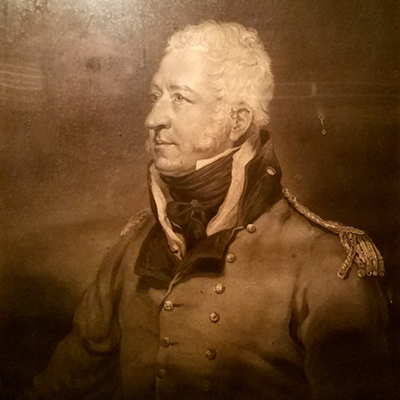
For most of its history, the Thomas Gaitskell Society has maintained complete silence with respect to both its nature and its traditions. However, times do change, and we change with them. In the era of the internet, the tremendous interest surrounding the Society has often resulted in many erroneous, even scurrilous, speculations about it, and silence no longer serves its purpose. It is in the spirit of providing the public with some understanding of the Society that a decision was made by leading members to publish some excerpts from the work of the official historian, Klaus Graf Klapperding von und zu Putzlappen (TGS 72), who, sadly, died last year under mysterious circumstances. He devoted many years to studying the history of the Society, and it is perhaps fitting that the fruits of his labor shall be appreciated more broadly by having some portion, however modest, of his life’s toil, translated from the Latin and made available to a wider audience. The Gaitskellians are confident that he would have approved, although it must be granted that the fragmentary form taken by this revelation will naturally be unsatisfying not only for the general public which will regret the relative lack of coherence in what it finds here, but also for the initiates who will feel intensely the poor representation this exposure offers of the depth and beauty to be found in the original document.
From the Enchiridion ad Rerum Gaitskellensium Societatis Gestarum facilem cognitionem (known more broadly as the Enchiridion, and sometimes referenced tendentiously by hostile sources as “the False Grammar” or simply “the Klapperding Grimoire”).
All great societies of men having at their root a desire to further a shared purpose, invariably conceived as affording its devoted brethren a fast abode, as it were, to talk, carouse, and indulge that ineffable quality of human life best expressed through Aristotle’s description of human beings as social animals – often anachronistically rendered as “political animal” – the historian upon first approaching one such as the Thomas Gaitskell Society (TGS) must prompt himself to move by whatever means he may beyond the orbit of common understanding and settled opinion that otherwise would render the particularly noble communities arrayed before his gaze like so many indistinct mountain peaks which, unresolved, limn the horizon’s very edge, and strive to set before the reader’s eye those lofty summits with the optick of such words and phrases as permit him to descry those shaded contours which themselves signify the true distinction between the merest hill or cwm and those Olympic peaks which God himself has marked for his finest creatures as the aeries of their mountain repose. Had I natively the confidence to be sure of that goal’s achievement, I would have laid my hands to this task long ago. As it was, what I often started, I sooner put aside in despair and humility before the grandeur of the subject much as that genius might have hesitated before setting the first block which by a long chain would some day find its consummation in the final pyramidion’s placement at Giza. But the urging of brothers and the subject matter itself emboldened me, and what began as strict duty ended as complete devotion, the fruit of which I now, like Isaac, gladly offer, albeit with fear and trembling, as my firstborn to the judgment of all. It is the effort of one man to set the words in their proper place that the Society’s music may sound for all. My twin hope is that others may reap from what I here set forth the enhanced pride that comes from the sure knowledge of a continuous thread extending centuries and binding all members together in the weft of our society’s fabric, and that the true story of the TGS, a story marked by the waxing and waning that all great human projects undergo as they pass through invariable, yet regular phases that history shines upon them, may herein be vouchsafed ever more as the bequeathed heritage of mankind’s vanguard and vicar: the Gaitskellians. (Preface 1)
The Society is fairly unique in alone being able to trace a continuous tradition, mostly oral in nature, that extends from the present day to remote antiquity. The purpose of its existence is well known and needs no further explanation here. The fundamental historical questions, however, center on the issue of the chain by which its traditions and rites have been transmitted as well as the matter of those luminaries who themselves played so important a role in keeping alive through times favorable and otherwise a light of honor that might very well have gone out on any number of occasions during the many centuries that served as the cradle of its maturation. As I said, the evidence illuminating this illustrious history is primarily oral, but there do also survive a few documentary fragments of capital importance for their attestation to the Society’s antiquity. The 13th century Mentula Palimpsest is an obvious example. But there is also Prof. Evelyn Granite’s 1933 autograph copy of the 7th century Codex Philolisbos, which original document sadly succumbed to the flames in 1934 when the other Lincoln Brigade in a pyromaniacal orgy set its torches to the quinta where it had been secreted to weather the storms of civil war then raging. There are, of course, other critical documents, but the Society’s oral traditions remain, as has always been the case, the primary means of transmission for its rites and lore.
Although it is a secure fact that the Society has enjoyed since remotest antiquity unbroken existence, in the manner of Anglican apostolic succession, nevertheless, the crux confronting the historian ultimately falls to the matter of whether it was truly started in Egypt with the notorious Imhotep circle, as many believe, or at a somewhat later date in Sumeria with Gudea. There are very persuasive arguments on both sides, and, while the evidence strongly favors a Memphite origin, there remain nagging questions, not easily dismissed, arising from the well attested temple rites of the Ur III period that cannot fail to give the serious scholar pause. Nor is this simply a matter of Gudea’s justly famed Cylinders or the cumulative evidence provided by the numerous ceremonial clay nails now to be found in various museums. The pose of an Ur-Nanshe, for example, evoking in anyone who beholds its depiction the very manner in which Gaitskellians today reverence their namesake, is a strong suggestion that something more significant is at work than mere independent development. Time, perhaps, has simply made this an irresoluble mystery, but, that uncertainty notwithstanding, it is doubtless true that there certainly was a clearly unified and highly ramified tradition in Mesopotamia by the mid-7th century BC, when Assurbanipal celebrated what today are unquestionably Gaitskellian rites during the annual Akitu festival’s sacred marriage, which, thanks to the painstaking research of Lord Cloudenot, has been long established, were maintained at Athens by the arkhon basileus during the classical period. There have circulated for a long time, particularly among those devoted to the cultivation of pure ignorance, mere wickedness, or both, malicious calumnies to the effect that the Hyksos or Sea Peoples, in the case of the Egyptian theory, or the loathsome Arameans, in the case of the Assyrian, brought these traditions with them, but they are obviously of no account being the depraved ravings of those whose singular purpose is to elevate the reputation of barbarian invaders whom every thinking man would gladly thank history for abandoning to the cleansing mercies of a justly merited oblivion. (I.1-2)
…and Caesar, having once secured his victory at Alesia, proceeded immediately to initiating a few key members of his staff into the Phallesterion in anticipation of his next political steps as he himself indicates in his Commentaries when he says, “Caesar certos legatos amicosque beneficio dignos in Phallesterion statim introducendos sibi existimavit ne quo tempore contra illos ipsos hostes bellum gesturus esset Romae. (I.29)
…
Augustus anticipated the Gaitksellian axiom, which was still in flux as various versions competed with each other for acceptance, when, as Suetonius notes, he urged “festina lente” or “take your time hurrying.” (I.81)
…
Marcus Aurelius, having to the great amusement of those troops who chanced to behold the display cut with his own hand the throat of an impoverished Dacian who had importuned bread during the former’s meditations, then, turned towards that son who would come to succeed him and fulfill all the promise of the Antonines, adjuring him to, if no more, accomplish two things throughout his life. The original bears quoting here because of its importance for Gaitskellian tradition. As the Scriptores Historiae Augustae report: “Tode euge, Marce. Et tu numerum tuum inveni et optime fac semper.” Literally, “This was well done, Marcus. You too, find your number and always do best.” Moreover, Fronto in his letters happens to shed more light on the meaning of this quotation. For he relates an episode in which, coming upon the Emperor at the baths, he observed him utter the identical phrase to Herodes Atticus whilst making an obscene gesture. Its relationship to the Gaitskellian axiom requires no explanation: indeed, exegesis almost degrades it, for…. (II.56)
The Christian phase, of course, presented its challenges, much as the Communist would in modern times…. (III.2)
Origen, once fully devoted to the Christian sect, broke completely with the Society, punctuating that decision by castrating himself with the justification that Scripture had so instructed him: “if thine eye offends you, pluck it out.” But, as all of his former brothers well understood, the act was a physical repudiation of… (III.26)
…the Askelipios and other Hermetic teachings being little more than thinly veiled revelations about the Society’s…. (IV.21)
The late antique period was marked by uncertainty in many areas, yet the Phallesterion-tradition, by then already hoared with age, continued, albeit in an attenuated state. To be sure, the crucial break between Augustine, the Christian, and Symmachus, the Pagan, represented the final culmination of a conflict that had been brewing even since before the days of Origen or Tertullian, for that matter. Nonethelss, though inevitable, it was painful once it occurred, and the far-reaching consequences of this rift, which would not be fully resolved for a number of centuries, meant that until Thomas Gaitskell himself was finally able to reconcile the schismatics, effectively there remained two separate societies, each, however, true in its own way to the tradition. (V.2)